
Key Takeaways
- In the realm of non-surgical butt lifts, options like injectable fillers, biostimulators, energy-based devices, vacuum therapy, and muscle stimulation focus on addressing volume, skin tightening, or muscle tone with less invasiveness compared to surgery.
- These options typically involve less downtime and fewer major risks than surgical BBLs or implants. They usually provide temporary results that require maintenance.
- Using dermal fillers and biostimulators to either provide volume or stimulate collagen treats for gradual improvement. These are best for subtle enhancements with a natural appearance rather than dramatic changes.
- Energy devices and vacuum therapy target skin laxity and cellulite, providing non-invasive skin tightening and temporary contour enhancements. They do not boost buttock volume.
- Muscle stimulation adds gluteal tone and firmness with induced contractions. This option is perfect for athletic or lean patients looking to enhance shape through muscle strengthening.
- Best candidates possess reasonable expectations, mild to moderate volume loss, good skin tone, and durable weight. Those with significant excess or major sagging may require surgery.
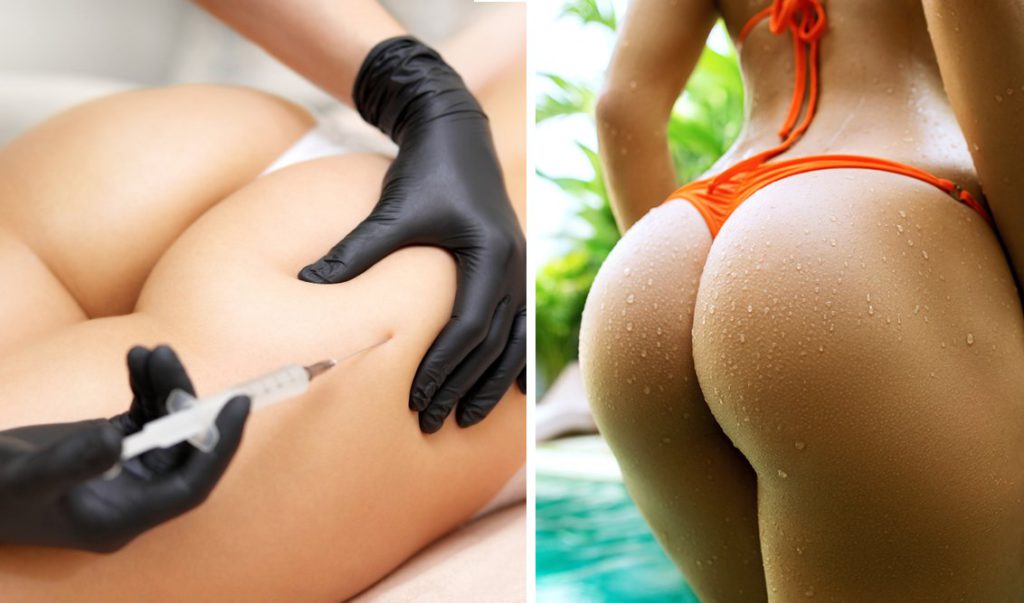
Non-surgical butt lift options are cosmetic treatments that enhance the shape of the buttocks without surgery. They range from hyaluronic acid or fat injections to skin-tightening radiofrequency to muscle-toning electrical therapy.
Advantages include quicker recovery, less expense, and fewer risks than surgical lifts. The requirements vary by method and often require repeat sessions spread over months.
Below we compare popular methods, results, recovery time, and average price to assist in selecting the right method.
Available Procedures
Non-surgical butt lift alternatives span an array of minimally invasive and non-invasive procedures that address volume, skin texture, and muscle definition. These procedures generally last 30 to 60 minutes per session, may require multiple sessions, and provide significantly less downtime and lower complication rates than surgical BBL or implants.
Here’s a quick summary of options with details below:
- Injectable fillers (hyaluronic acid, Sculptra)
- Biostimulators (Sculptra, Radiesse)
- Energy devices (radiofrequency, ultrasound, laser)
- Vacuum therapy (suction cups)
- Muscle stimulation (Emsculpt, CoolTone)
- Fat reduction alternatives (CoolSculpting, 3D Lipo)
1. Injectable Fillers
Dermal filler like hyaluronic acid and select formulas of Sculptra can be applied in precise locations to volumize and reshape contour without incision or general anesthesia. Treatments occur on a treatment table in an office, often during a 30 to 60 minute visit, and provide a subtle lift with instant shape transformation.
Results are temporary. The majority of patients experience effects for around 12 to 24 months and will require maintenance treatments. This procedure is great for individuals pursuing subtle, natural-looking augmentation instead of dramatic reshaping.
2. Biostimulators
Biostimulatory fillers like Sculptra and Radiesse work by encouraging new collagen to form instead of just occupying space. Over the course of months, multiple sessions remodel tissue and eventually boost firmness and fullness.
This option appeals to individuals with minor volume loss or early laxity who desire regenerative enhancement versus immediate, large-scale volumization. Several visits are typical, and final results can require a couple of months to manifest.
3. Energy Devices
Radiofrequency, ultrasound and laser treatments tighten skin and treat cellulite by inducing collagen and elastin production in the dermis and subcutis. These non-invasive procedures are only mildly uncomfortable and necessitate no downtime, so they’re convenient for hectic lifestyles.
They’re best used to enhance skin laxity and texture, not to add volume to the booty. Treatments in series deliver optimal results.
4. Vacuum Therapy
Vacuum therapy uses suction cups to lift and shape the buttocks, enhance circulation, and promote lymphatic drainage. Results are rapid but transient, therefore multiple sessions are required for sustained results, which renders the technique convenient for event preparation.
The procedure is both painless and non-invasive and can minimize the appearance of cellulite with consistent treatment.
5. Muscle Stimulation
Emsculpt and customizable CoolTone are high-intensity focused electromagnetic devices that generate powerful muscle contractions to build gluteal mass and tone. They sculpt a hardened, lifted appearance through fortification of underlying muscle instead of fat padding.
Best for athletic or lean patients, these procedures typically require multiple treatments and occasional touch-ups to maintain gains.
Ideal Candidates
Non-surgical butt lift options are best suited for individuals seeking subtle, natural-looking enhancement without surgery. These treatments are appropriate for candidates who anticipate modest improvement, not transforming reshaping, and who understand that outcomes tend to be temporary and require maintenance sessions.
Individuals with mild to moderate volume loss and good skin elasticity provide the clearest candidates. If the buttock tissue still responds to filling or tightening, injectables, fat grafting alternatives or energy-based skin tightening can add shape and lift. Slim patients with minimal excess fat to harvest often opt for non-surgical options as they cannot as easily fat graft lifts surgically.
Non-surgical techniques allow them to achieve volume without liposuction or fat transfer. Even body weight and good general health count. Weight swings alter silhouette and can compromise the longevity of any non-surgical outcome. Candidates must not have any active infections, uncontrolled chronic disease or conditions that will impair healing.
Individuals who are not candidates for surgical butt lifts because of medical risk or who just don’t want surgical downtime opt for non-surgical options instead. Down-to-earth is key. Ideal candidates understand limitations. Many treatments give temporary results that may fade in about two years, and multiple sessions may be needed for the desired effect.
For those wanting reversible results, say something that they’d want to fade if they change their mind, these are appealing options. Those who have experimented with other augmentation and want a less invasive next step fit nicely. Minimal downtime is an easy attractor. Candidates who desire a “lunch break butt lift” with same-day return to most activities are good fits.
Non-surgical procedures can mean minimal downtime, minimal swelling or soreness, and they steer clear of the prolonged rest and potential risks of surgery. Factors that influence candidacy include:
- Degree of volume loss: Mild to moderate improves best with non-surgical methods.
- Skin quality: Good elasticity permits more lift and smoother contour.
- Body fat availability: Low-fat individuals benefit from injectable fillers or energy devices.
- Health status: Stable weight and absence of major medical issues aid safety and durability.
- Treatment goals: preference for subtle, temporary, or reversible changes.
- Prior procedures: Previous surgeries or implants affect options and planning.
- Lifestyle needs: need for minimal downtime or quick return to work and travel.
Candidates with extreme excess skin, major sagging, or large-scale reshaping needs typically will not see ideal results non-surgically and should speak to a specialist about surgery.
Treatment Journey
Non-Surgical Butt Lift Experience Treatment Journey
Patients begin with a goal-setting consultation, medical review and selection of the most appropriate modality: injectable fillers, fat grafting alternatives, muscle-sculpting devices or energy-based skin-tightening. The initial session usually runs approximately one hour. Providers discuss what to expect, how many sessions, cost and risks, then schedule.
Pre-treatment assessment and planning
A targeted exam evaluates your skin quality and fat and muscle tone. Photos and measurements track change. Providers talk realistic goals and whether to sculpt by deflating one area and volumizing another. It can contour a trouble spot and create curves where there are none, delivering a more harmonious silhouette.
We may request labs or a health clearance for patients with specific conditions.
The procedure session
As a rule of thumb, non-surgical butt lifts are streamlined outpatient treatments with little to no downtime. The initial visit is approximately an hour and frequently employs local numbing or topical anesthetic.
With filler lifts, little pokes create bulk and contour. For devices, clinicians pass applicators that excite tissue to generate collagen or muscle. Several passes or small injections produce a smooth, even treatment result.
Patients can walk and do light activity that same day but should abstain from intense workouts and direct pressure for the initial 48 hours.
Immediate post-procedure care
Usually patients are a little sore for the first couple of days after treatment. Mild swelling, tenderness, redness, and a sense of fullness are common and subside quickly.
Providers give written aftercare instructions that include gentle cleansing, short ice packs for swelling, and pain relief options. Special massage guidelines and compression garments may need to be worn to contour the area and assist the product or fluid to settle.
Adhere closely to these steps to maximize results and minimize side effects.
Follow-up and additional sessions
The initial volume will vary as initial swelling decreases. The shape is more defined and proportioned in a matter of weeks.
There can be multiple sessions for results, typically spaced weeks apart to let tissue recover and grow collagen over time. Each follow-up goes over progress and modifies technique or dosing.
Long-term maintenance and expectations
Results can persist for up to three years, perhaps more, with collagen-led enhancement frequently outlasting the original carrier gel. Regular touch-ups extend the effect.
Patients are counseled on lifestyle measures, including weight stability, exercise, and sun protection, to help preserve results.
Safety Profile
Non-surgical butt lift procedures generally have a safer profile compared to surgical BBL or buttock implants. These treatments rely on fillers, biostimulators, or energy-based platforms instead of general anesthesia, large incisions, or fat grafting. Many of the most serious surgical risks are sidestepped. The vast majority feel only mild, temporary side effects and can return to normal activities rapidly.
Typical short-term side effects are minor swelling, redness, bruising, and tenderness around the treated area. These symptoms generally subside within several days to a week. The area might feel swollen and tender the first few days, and lumps or bumps can be noticed in the first few weeks as filler settles or integrates.
The majority of patients experience minimal downtime, as several resume normal activities within minutes to a day. It is recommended to avoid strenuous exercise for 24 to 48 hours to minimize swelling and bruising.
| Potential Risk | Typical Timeline | How Common | Notes |
|---|---|---|---|
| Mild swelling, redness, bruising | Days to 1 week | Common | Expected; ice and rest help |
| Tenderness or soreness | Days to 2 weeks | Common | Over-the-counter pain relief usually enough |
| Lumps or unevenness | 1–4 weeks | Common to occasional | Massage or follow-up can help |
| Infection at injection site | Days to weeks | Uncommon | Proper technique and sterile setting reduce risk |
| Allergic reaction | Immediate to days | Rare | Allergy history and product choice matter |
| Vascular compromise (rare) | Immediate | Very rare | Trained injector and technique critical |
Non-surgical avenues do not risk complications associated with general anesthesia, fat embolism, or implant migration that are observed with surgical alternatives. Fat embolism, the life-threatening worry in BBL fat that gets into blood vessels, is not an issue with hyaluronic acid or synthetic filler injections when done properly.
Similarly, implant-related issues, such as shifting or capsular contracture, do not factor in. Safety is provider skill, product choice, and setting-dependent. Selecting a certified clinic with licensed professionals that adhere to the right procedures is imperative.
Sophisticated injection techniques, adoption of imaging or cannulas rather than needles, and maintaining sterile technique minimize the risk of complications. Many patients and professionals support stronger regulation. A 2020 report found that 90% of people wanted a national licensing scheme to improve safety.
Pre-procedure steps lower risks: Avoid blood thinners like aspirin for at least a week prior to reduce bleeding and bruising. Aftercare matters: Follow instructions on resting, avoid intense exercise for 24 to 48 hours, and report unusual pain or signs of infection promptly.
Going abroad for treatment out of the regulated medical system is dangerous. Go to good local clinics where you can get follow-up care.
Long-Term Outlook
Non-surgical butt lift results don’t last forever, so there’s maintenance involved to maintain gains. Most methods, including dermal fillers and energy-based skin tightening, produce apparent change that diminishes over time as the body reabsorbs products and ages. Most patients experience results for several months, up to two years, but repeat treatments are typical to keep sculpted shape and firmness.
Best results sometimes take two to three spaced a few weeks apart to accumulate impact and increase duration.
PLLA-based collagen stimulators such as Sculptra paint a different picture when it comes to the timeline. They leverage poly-L-lactic acid microparticles to activate the body’s innate collagen synthesis. Unlike typical hyaluronic or silicone-like fillers that add immediate volume, PLLA is gradual.
The treated area tightens and volumizes as new collagen develops over weeks to months. This slow transformation can persist because it depends on tissue remodeling, not a plumped-in addition. For some, collagen-stimulated results can last closer to that 2 year edge of the average range, and maintenance sessions tend to be less frequent once a baseline has been established.
Relative to surgical buttock augmentation, non-surgical methods have less upfront risk but shorter longevity. Surgery offers a more long-term structural change, whether with implants or fat transfer, but comes with more surgical risk, longer recovery, and greater expense. Non-surgical methods work for those who want a modest lift with less downtime and less surgical risk, and who embrace ongoing maintenance.
Practitioners should talk about realistic goals so patients select a strategy that matches their tolerance for repeat visits, cost, and downtime.
- Longevity, maintenance frequency, and cost comparisons:
- Temporary fillers (hyaluronic, biostimulatory mixed types): Last 6 to 12 months for many users; maintenance every 6 to 12 months; moderate cost per session depending on volume and region.
- PLLA/collagen stimulators: Effects build over 3 to 6 months and can last up to 18 to 24 months; initial 2 to 3 sessions spaced 4 to 8 weeks apart, then touch-ups every 12 to 24 months; cost is higher per session but fewer sessions long term.
- Energy-based skin tightening (radiofrequency, ultrasound): Gradual skin lift and firmness for 6 to 12 months; maintenance every 6 to 12 months; lower per-session cost but variable results.
- Surgical augmentation: Permanent structural change; one-time higher cost, surgical risks, and longer recovery; occasional revisions are possible.
Each person’s experience is unique to their skin type, metabolism, weight fluctuations, and lifestyle. Talk about maintenance plans, realistic timelines, and cost estimates with a qualified practitioner before beginning treatment.
My Perspective
Non-surgical butt lift alternatives provide a fantastic route for individuals seeking subtle, natural transformation without invasive surgery. A non-surgical butt lift is a minimally invasive alternative to surgical buttock contouring treatments, including butt implants and the Brazilian butt lift (BBL). These alternatives utilize injectables and other office-based procedures to volumize, fill, and lift the region in ways that appear like subtle, elegant enhancement as opposed to abrupt, overly dramatic transformation.

Most of these treatments focus on dermal fillers to volumize and shape the buttocks. Fillers enable doctors to hit precise areas, such as upper pole fullness, lateral hip tapering, or dimples smoothing, so the outcome matches the individual’s physique and aspirations. We typically use a topical numbing agent prior to the procedure to minimize discomfort. Most treatments are quick and require no anesthesia, no cuts, and minimal pain.
That renders them a suitable match for those who must go back to work or fly somewhere within 24 hours. Side effects typically are mild and transient. Most patients encounter minimal swelling, bruising, or tenderness after the procedure, which subsides within a few days. Patients typically return to normal activities within 24 hours and return to strenuous activities after a brief downtime.
Best results generally need two to three sessions, a few weeks apart, to layer volume, contour shape and let tissue settle between visits. A non-surgical butt lift can last up to two years. However, lifestyle, weight fluctuations and muscle tissue tone play a role in longevity. The range of treatments gives us the flexibility to customize approaches for different physiques and desired looks.
For low tone and modest volume loss, strategic filler placement can plump back in a rounder silhouette. For others seeking improved skin quality or subtle tightening, energy-based treatments or collagen-inducing injections can be combined with filler. Examples include filler to add upper-pole lift and radiofrequency to firm the skin or fat-dissolving injections along the hip crease to improve proportions before adding volume.
With breakthrough regenerative and body sculpting technologies, the non-surgical options are more effective than ever. Newer filler formulations and improved placements imaging along with hybrid protocols provide more predictable results. Surgery continues to be the gold standard for dramatic transformations and volume shifts. Non-surgical treatments provide remarkable outcomes for a lot of patients, particularly those who want less risk, shorter downtime, and incremental, repeatable enhancements.
Conclusion
Non-surgical butt lift treatments provide tangible, quantifiable methods to lift, contour and firm the buttocks without surgery. Filler injections, radiofrequency, ultrasound and muscle stimulation like Emsculpt each have their own advantages. Filler quickly adds volume. Radiofrequency firms skin for months. Ultrasound reduces fat and tightens deep tissue. Muscle stimulation builds tone with repeated treatments. Most notice change after just a few sessions and achieve optimal results with a mixed-methods plan.
Expect limits: results last months to a few years and need upkeep. Choose a doctor that is board-certified, displays before and after pictures on their website, and discusses potential risks. Experiment with a single mini-course, monitor progress with pictures, then decide what to maintain. Ready to map out your next move? Book a consult with a trusted clinic and compare your treatment options.
Frequently Asked Questions
What non-surgical butt lift procedures are available?
Popular choices are dermal filler injections (such as hyaluronic acid), Sculptra (poly-L-lactic acid) for collagen stimulation, fat-dissolving injections, radiofrequency and ultrasound skin tightening, and injectable biostimulators. Each one addresses either shape, volume or skin firmness, and none involve surgery.
Who is an ideal candidate for a non-surgical butt lift?
The best candidates are individuals who desire subtle volume or contour enhancements, have realistic expectations, and prefer no downtime. If you have notable ptosis or large volume requirements, surgical options are preferred.
How long do results typically last?
Results vary. Fillers last six to eighteen months, Sculptra can last one to three years, and skin-tightening effects may last six to twelve months with maintenance. It depends on personal lifestyle and type of treatment.
What is the typical recovery and downtime?
All but a few non-surgical treatments have minimal downtime. Anticipate minor swelling, bruising, or soreness for a few days to a couple of weeks. You can generally resume light activities within 24 to 48 hours.
Are non-surgical butt lifts safe?
Non-surgical options, when done by a licensed, qualified provider, are typically low-risk. Risks range from infection and asymmetry to lumps and rare vascular complications. Proper provider selection lowers risk.
How many treatment sessions are usually needed?
Most patients require 1 to 3 treatments weeks apart. Fillers typically experience immediate change after a single session. Collagen-stimulating treatments almost always require a series for full effect.
Will a non-surgical butt lift look natural?
Yes, when performed by an experienced provider using modest volumes and technique. Non-surgical doesn’t mean dramatic size increases; it means subtle, natural looking improvement.